
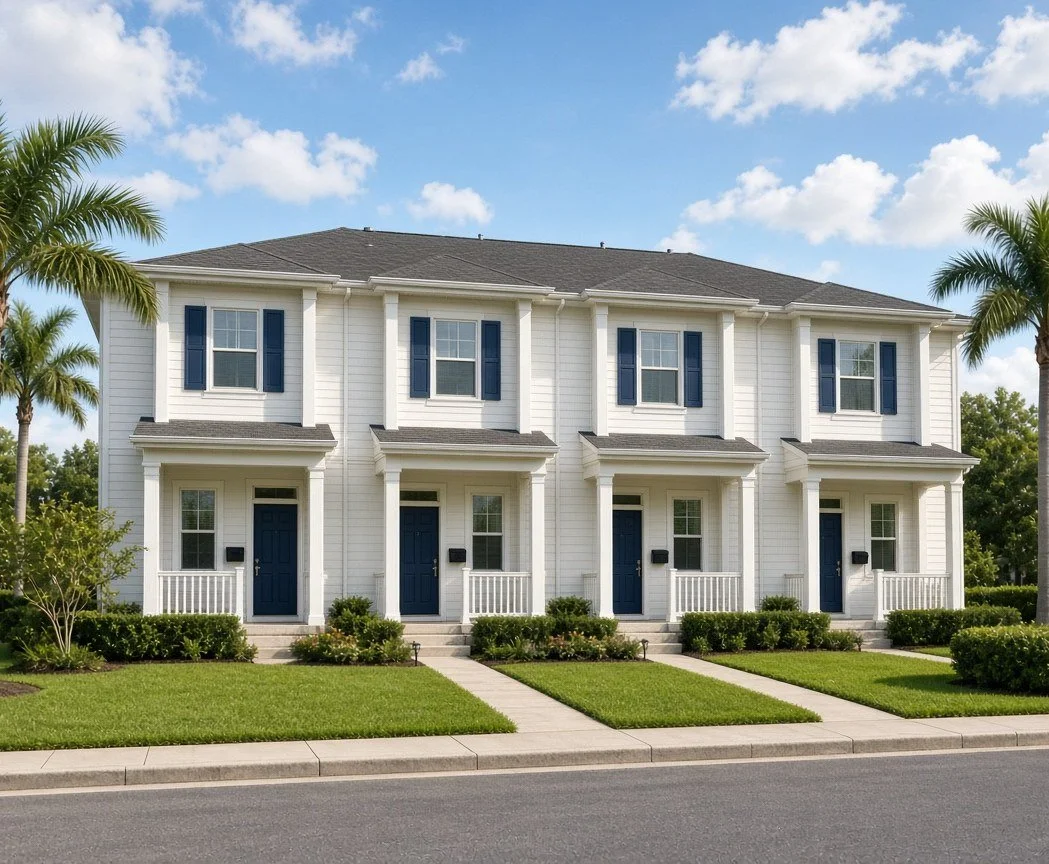
Picture a duplex: you live on one side, a tenant lives on the other, and their rent helps pay the mortgage. Can your VA loan buy that? Yes, with a few rules attached.
The Short Answer
A VA loan can finance a property with up to four family units, usually without a down payment. Rent from the other units can count toward qualifying under certain conditions. The catch: you must live in one of the units.
You Have to Live There
When using a VA loan, you must certify that you intend to live in the property. Buying purely as an investment isn't an eligible use of a VA loan.
VA expects you to move in within 60 days of closing. A later date works only if you certify a specific move-in date and that date depends on a particular future event.
If you're on active duty and can't move in within a reasonable time, your spouse living in the home can satisfy the occupancy rule. Deployed service members, single or married, are considered on temporary duty and can still meet the requirement.
Counting Rent From the Other Units
If you use rental income to qualify, VA requires you to show you can handle being a landlord. You demonstrate that with documented experience managing rental units, a property management company, or both.
The lender then counts 75% of the rent on the lease or rental agreement, unless a higher percentage can be documented. For new construction, it's 75% of the appraiser's estimate of fair monthly rent.
Hypothetical example: A unit is leased for $1,600 a month. The lender counts $1,200 (75%) toward your income.
Six Months of Cash Reserves
If you use rental income to qualify, VA also requires cash reserves equal to at least six months of mortgage payments, which includes principal, interest, taxes, and insurance (PITI).
Those reserves must be your own money, sitting in your account before closing. Home equity, gifts, and VA cash-out refinance proceeds don't count.
Loan Limits and the Funding Fee
With full VA benefits, there's no VA loan limit, though lenders may set their own.
Unless you're exempt, you'll also pay a one-time funding fee. For a first-time purchase with less than 5% down, it's 2.15% of the loan amount. Veterans receiving VA compensation for a service-connected disability and surviving spouses receiving Dependency and Indemnity Compensation (DIC) are among those exempt. See our VA funding fee rates and exemptions.
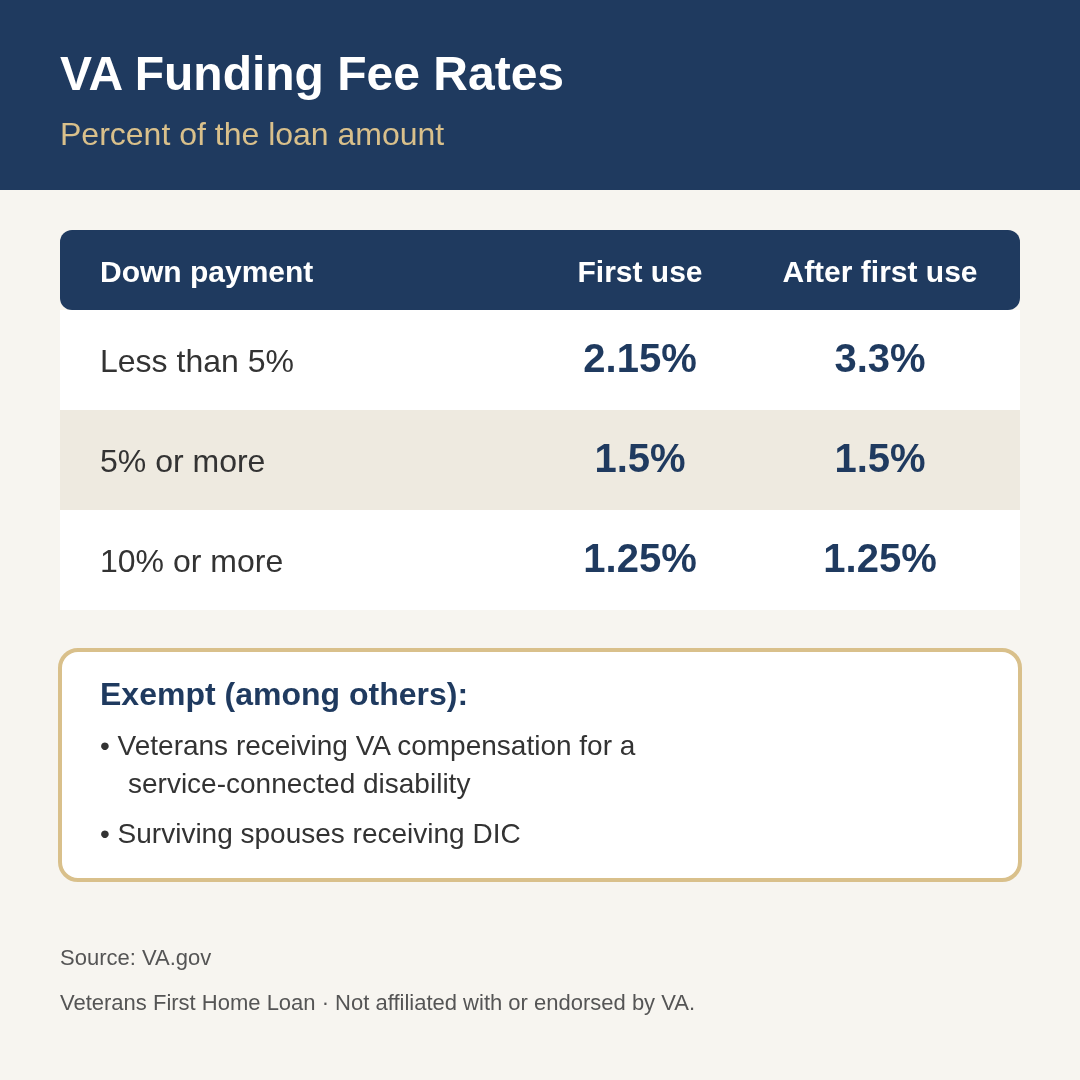
VA funding fee rates, by down payment and prior use. Source: VA.gov.
What to Weigh Before Buying
No down payment and help qualifying are real advantages, but being a landlord is real work. Units can sit empty, repairs multiply, landlording takes time, property managers cost money, and borrowing close to 100% leaves little equity if values fall. Tenants also bring fair housing and local landlord-tenant laws into play, so get local advice.
The building has to qualify too: each unit needs its own way in (no walking through another unit), plus its own kitchen and bathroom.
The Bottom Line
Live in one unit, and if you need the rent to qualify, bring landlord proof and six months of reserves. VA's rules are the minimum; lenders may add their own, so ask each lender what it requires before you make an offer. For how equity builds on a VA purchase, read The VA Home Loan: A Force Multiplier for Building Wealth, or try our VA loan payment calculator.
Official VA information: VA home loans, VA loan limits
Vets First Home Loan is an independent educational website and is not affiliated with or endorsed by the U.S. Department of Veterans Affairs. This article is general education, not financial, legal, tax, or mortgage advice.
Related reading